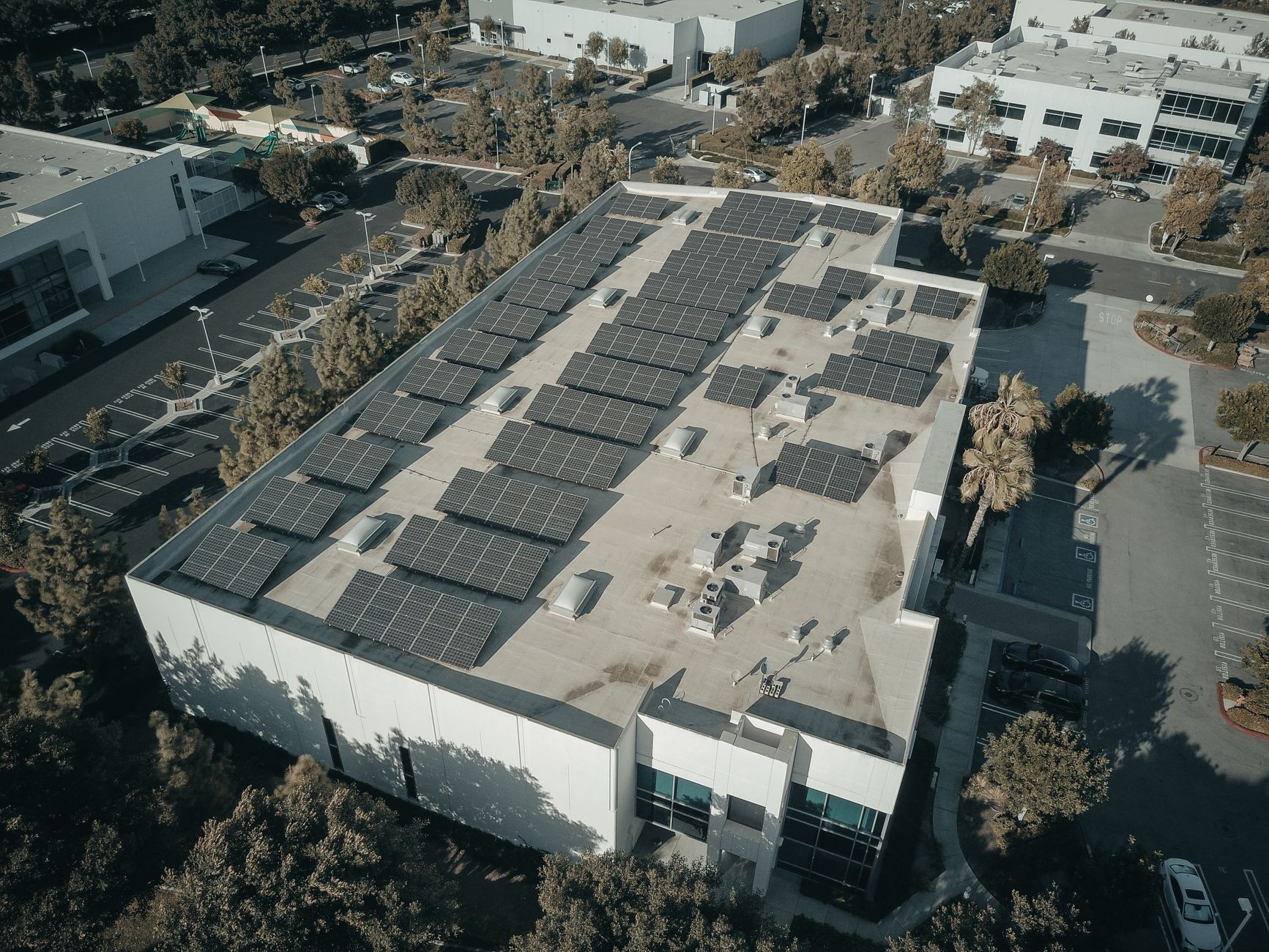
If you own or manage a commercial facility in Temecula, the hardest part of going solar is not the panels. It is not knowing what happens next, or who is responsible when something stalls. A roof crew points at the electrician, the electrician points at the city, and the city points at Southern California Edison.
We work as one accountable team that handles design, permitting, installation, and interconnection without contractor handoffs, so here is the honest timeline of a commercial solar project in Temecula and Riverside County, stage by stage, along with where projects tend to slow down and what you can do about it.

Stage 1: Site Assessment and Energy Audit (Week 1 to 2)
Everything starts with your utility bills. We pull twelve months of Southern California Edison interval data to see when you actually use power, not just how much. A warehouse that runs morning shifts has a very different solar profile than a winery tasting room that peaks on weekend afternoons, and the design has to match the load curve, not a generic average.
During the site visit we evaluate roof age and structural capacity, available ground or carport space, electrical room condition, and the main service panel rating. For older Temecula buildings, the service panel is often the first surprise. A 1990s warehouse may need a panel or service upgrade before it can accept a large solar system, and finding that out in week one is far better than discovering it during installation.
- Twelve months of usage and demand charges reviewed
- Roof, structural, and electrical capacity confirmed
- Shading analysis across the full year, including winter sun angles
- Preliminary system size matched to your actual load
The output of this stage is not a sales number. It is a realistic picture of what your building can support and what it would take to get there.
Stage 2: System Design and Proposal (Week 2 to 4)
With real usage data, the design team sizes the array to your consumption rather than to fill the roof. Under California's net billing rules, oversizing a system to export surplus rarely pays the way it once did, so right-sizing matters more now than it did a few years ago.
The proposal should include production estimates in kilowatt-hours per year, a clear price, the financing options you qualify for, and a realistic payback range. Ask any installer to show the assumptions behind the savings, including the utility rate schedule used and whether demand charges were modeled. If the numbers arrive without assumptions, treat them carefully, because the assumptions are where optimistic proposals hide.
This is also the stage to decide whether battery storage belongs in the project. For many Temecula facilities, storage changes the economics enough that it should be evaluated up front rather than bolted on later.
Stage 3: Permitting and Plan Check (Week 4 to 10)
This is where projects most often stall, and where having one team matters most. Commercial solar in Temecula typically runs through the City of Temecula building department or, for unincorporated parcels, Riverside County. Plan check covers structural calculations, electrical single-line diagrams, and fire setback compliance.
What slows permits down
- Incomplete structural letters from a licensed engineer
- Fire access pathway issues on the roof
- Title 24 and electrical code corrections
- Missing or mismatched equipment cut sheets
A complete first submission is the single biggest lever on speed. When plan check returns corrections, a team that owns the whole project can turn them around in days instead of waiting on a subcontractor who has moved on to another job. We track the correction cycle closely because every round trip with the city adds calendar time you are paying for in full utility bills.
Stage 4: SCE Interconnection Application (Runs in Parallel)
Southern California Edison interconnection runs alongside permitting, not after it. For systems under certain size thresholds, SCE uses a streamlined review, but larger commercial systems can trigger a more detailed study of the local grid that takes longer. Starting this application early prevents a finished system from sitting dark while paperwork catches up.
The most common interconnection delay we see is a mismatch between the application and the final installed equipment. If the inverter or system size on file does not match what gets built, SCE can require a resubmission that adds weeks. Submitting accurate equipment details up front, and keeping the install aligned with what was filed, avoids that loop entirely.
Stage 5: Installation (1 to 4 Weeks On Site)
Installation time depends on system size and mounting type. A rooftop array on a single Temecula warehouse may take one to two weeks. A larger system with carports or ground mounts and battery storage takes longer. Crews handle racking, panels, conduit, inverters, and the electrical tie-in to your service.
Because the same company designed it, the install crew is building exactly what plan check approved. There is no gap between the drawing and the build, and no second contractor reinterpreting someone else's plans. Day-to-day operations at the facility usually continue with minimal disruption, since most of the work happens on the roof and at the electrical room rather than inside your space.
Stage 6: Inspection and Permission to Operate (Week After Install)
The local building department inspects the finished system. Once it passes, SCE issues Permission to Operate, the formal approval to turn the system on and export to the grid. Until that arrives, the system stays off. We schedule final inspection promptly and submit the PTO request the same day it passes, because the clock on your savings does not start until the system is energized.
Skipping ahead is not an option here, but tightening the gap between install, inspection, and PTO is, and it is one of the clearest places an accountable team saves you money.
What the Whole Timeline Looks Like
For a typical mid-size commercial solar project in the Inland Empire, plan for roughly three to five months from contract to Permission to Operate. Smaller rooftop systems can move faster. Projects with structural upgrades, battery storage, or SCE study requirements take longer. The variable that owners can least afford to ignore is permitting completeness, because a clean submission shortens nearly every other stage.
The takeaway is straightforward. Most of the timeline is administrative, not physical, and most delays come from handoffs and incomplete paperwork rather than from the construction itself. Choosing a team that owns every stage is the most reliable way to keep a Temecula commercial solar project on schedule.
Sources
- Southern California Edison, Generating Your Own Power and Interconnection
- City of Temecula, Building and Safety permit information
- California Energy Commission, Title 24 building energy standards
- U.S. Department of Energy, Solar Energy Technologies Office