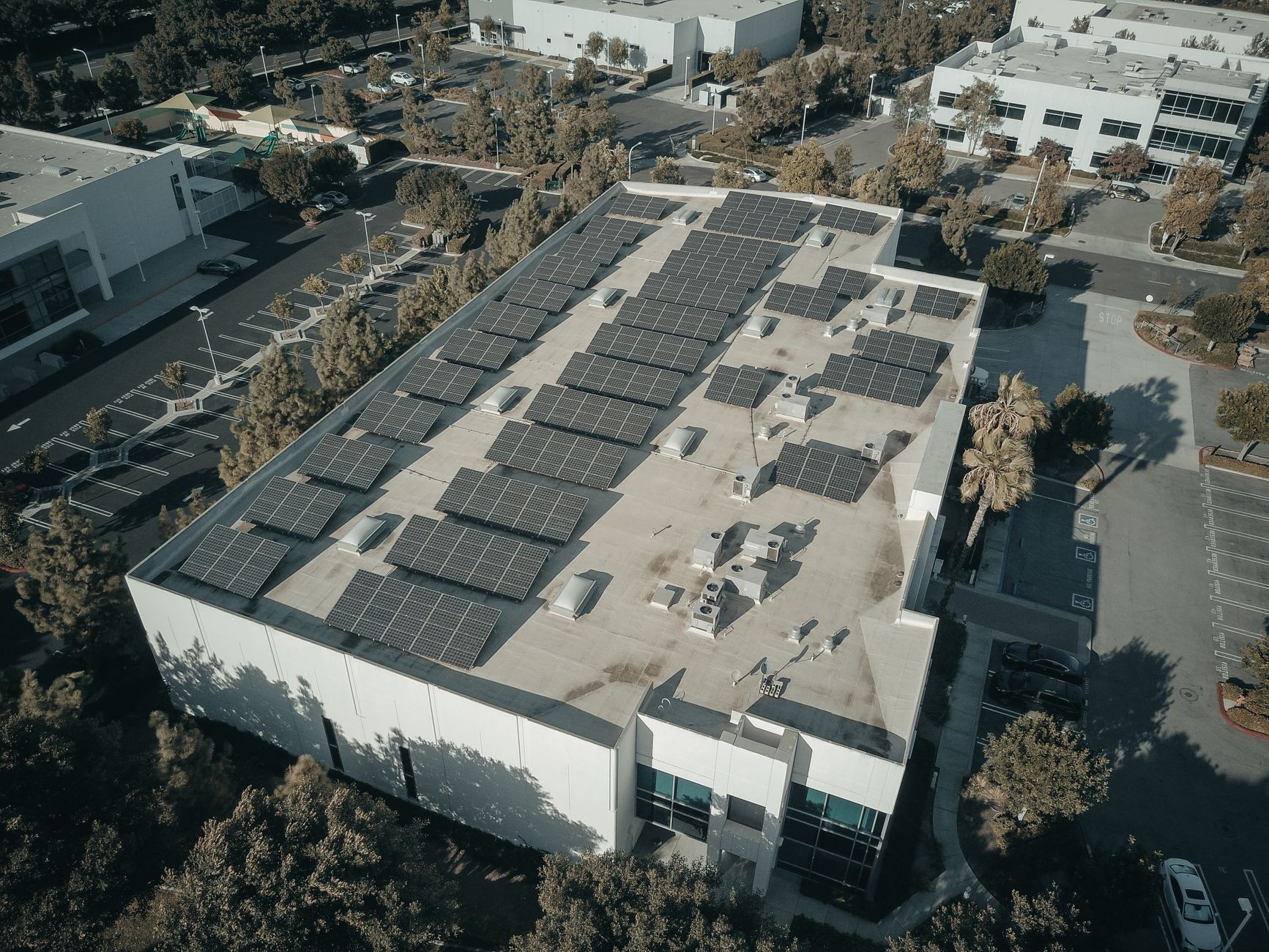
Solar gets sold as a set-it-and-forget-it investment. Sign the contract, flip the switch, collect the savings for twenty-five years. That story sells systems, but it quietly costs owners money, because a commercial solar array is a working power plant on your roof, and power plants need attention.
Operations and maintenance, known as O&M, is the least glamorous part of commercial solar and the part most likely to be skipped. Here are five myths about O&M and what they actually cost when believed.

Myth 1: Solar Has No Moving Parts, So It Needs No Maintenance
It is true that panels have no moving parts. But a commercial system has far more than panels. Inverters, the workhorses that convert solar power into usable electricity, are the components most likely to fail and typically have shorter lifespans than the panels themselves. Combiner boxes, wiring, connectors, mounting hardware, and monitoring equipment all degrade or fail over time.
The truth is that solar needs less maintenance than most equipment, not none. The owners who get burned are the ones who interpret less as zero and walk away from the system entirely after install.
Myth 2: If It Is Still Producing, It Is Fine
A system can keep producing while quietly underperforming. If one string of panels goes offline, the array still generates power, just less of it. Without monitoring, an owner has no way to know a problem exists until the savings shrink, and even then the cause is hard to find after the fact.
This is the most expensive myth, because the loss is invisible. A system running at eighty-five percent of capacity still looks like it works. Over a year, that gap is real money walking out the door unnoticed. Continuous monitoring is what turns an invisible loss into an alert you can act on the same week it starts.
Myth 3: Rain Cleans the Panels Well Enough
In Temecula and the Inland Empire, this myth is especially costly. The region is dry, dusty, and goes months with little rain. Dust, agricultural particulates near wineries and farms, bird droppings, and the residue from wildfire smoke build up on panels and cut production.
- Soiling can reduce output by a measurable margin in dry, dusty climates
- Long rain-free stretches let buildup accumulate steadily
- Periodic professional cleaning recovers lost production
Rain helps in wet climates. In Southern California's dry months, it does not arrive often enough to do the job, and the buildup that accumulates between storms can quietly shave a meaningful slice off your generation.
Myth 4: The Installer's Warranty Covers Everything
Warranties matter, but they are not maintenance. A panel warranty covers a defective panel. It does not pay someone to notice the panel failed, diagnose it, file the claim, and replace it. A warranty without an O&M plan often means the owner discovers a problem late and handles the legwork alone.
There is also the question of who honors the warranty if the installer is gone. Equipment warranties from a manufacturer are only useful if someone is managing the relationship and the claim. That is what O&M provides, and it is the part most owners do not realize they are missing until they need it.
Myth 5: O&M Is an Optional Expense to Cut
When budgets tighten, O&M is often the first line owners try to drop. But O&M is what protects the asset that justified the whole investment. The system was financed on a projected return over decades. That return assumes the system keeps performing at expected levels. Skip the maintenance and the actual return falls below the projection, often without anyone noticing until the shortfall is significant.
What a real O&M program includes
- Continuous production monitoring with alerts when output drops
- Periodic inspection of inverters, wiring, and connections
- Scheduled cleaning matched to the local climate
- Warranty management and claim handling on your behalf
- Prompt repair when a fault is detected
Cutting O&M to save a modest annual cost can expose a much larger loss in production, which is a poor trade on an asset meant to perform for twenty-five years.
The Bottom Line on O&M
Commercial solar is a long-term financial asset, and like any asset it performs to the degree it is maintained. The cost of a sensible O&M program is small next to the cost of years of quiet underperformance. The owners who treat O&M as protection for their return, rather than an expense to trim, are the ones whose systems still hit projections in year fifteen.
The best time to plan for maintenance is before the system is installed, with the same team that built it, so accountability for performance never changes hands. A system that is monitored, cleaned, and serviced is the one that actually delivers the return that made you say yes in the first place.
Sources
- National Renewable Energy Laboratory, photovoltaic operations and maintenance best practices
- U.S. Department of Energy, Solar Energy Technologies Office
- Solar Energy Industries Association, system performance and O&M guidance
- Sandia National Laboratories, PV reliability and soiling research


