Why the Inland Empire Has Become a Significant Commercial Solar Market
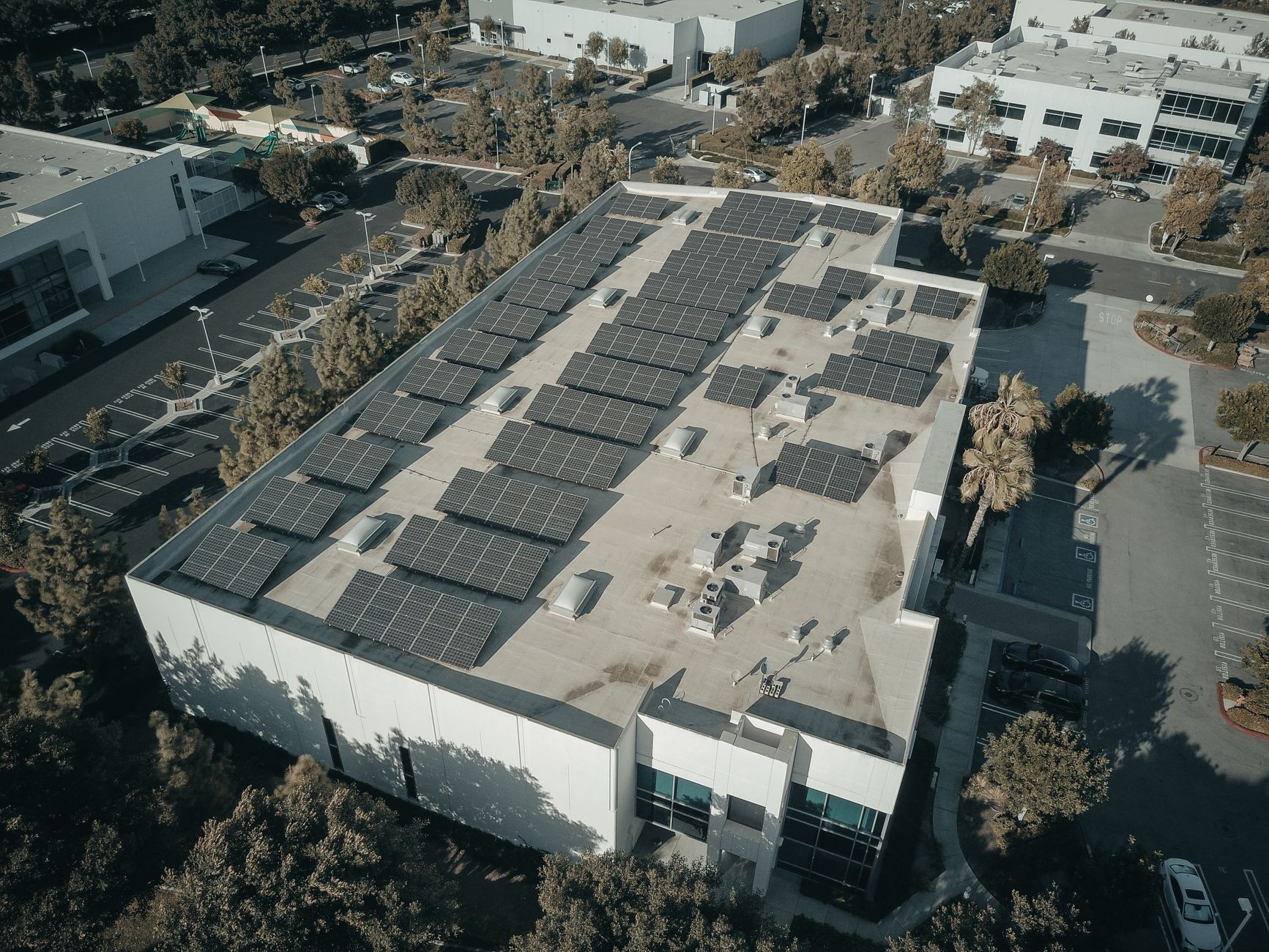
The Inland Empire — broadly the corridor spanning western Riverside County and San Bernardino County — hosts one of the densest concentrations of logistics, warehousing, manufacturing, and light industrial space in the western United States. These facilities share several characteristics that make commercial solar compelling: large, flat or low-slope roofs with minimal shading, high daytime electricity consumption that aligns well with solar production hours, and exposure to SCE's commercial rate structures where peak demand charges can be a significant cost driver.
Load Profiles That Favor Solar
Distribution centers, cold storage facilities, and manufacturing plants often run equipment during daylight hours — refrigeration systems, conveyor lines, air compressors, lighting. That operational pattern maps closely to when a rooftop solar array produces its peak output. The alignment between production and consumption is one of the factors that determines how quickly a commercial solar investment pays back, and Inland Empire industrial properties tend to score well on that measure.


Factors That Complicate Projects in This Region
Large roof areas sometimes come with deferred maintenance issues — aging membranes, structural sections that need reinforcement before solar can be attached. A credible solar design-build partner will not skip the roof assessment to win a project faster; they will surface those conditions early so the facility owner can plan accordingly. Interconnection timelines at SCE are another real variable, particularly for systems above a certain kW threshold that enter a more detailed review queue. Projects that account for these timelines during the pre-design phase land closer to their projected go-live dates.
Questions Worth Resolving Before You Commit
- Has the installer done a structural assessment, not just a satellite image review?
- Is the proposed system sized for your current load, or does it account for EV charging or battery storage you may add?
- Who manages the SCE interconnection application and attends any utility-required site inspections?
- What does ongoing monitoring and maintenance look like post-installation?
OM Energy serves commercial and industrial clients across the Inland Empire with a single-team model: one organization handles design, permitting, installation, and O&M so that accountability is never in question.