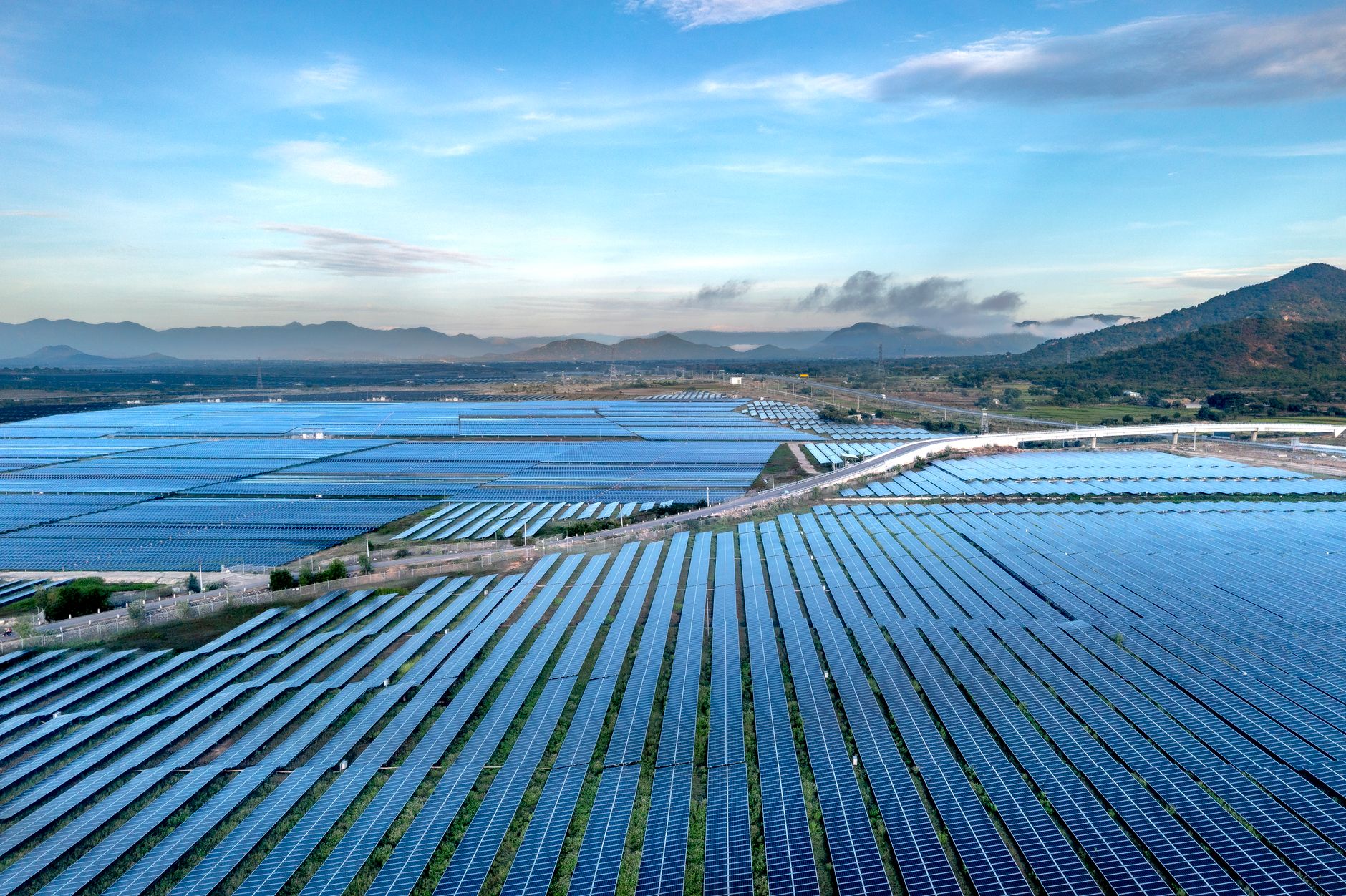
The Inland Empire runs on logistics. From Perris to Moreno Valley to the warehouses along the I-15 corridor near Temecula, millions of square feet of distribution space sit under wide, flat, mostly empty rooftops. For a warehouse owner or operator, that roof is one of the most underused assets on the balance sheet.
Warehouse facilities are close to an ideal case for commercial solar, but only if the system is designed around how a warehouse actually uses power. Here is what makes them work and what owners should weigh before committing.

Why Warehouses Are Built for Solar
Three features make logistics buildings strong solar candidates.
- Large unobstructed roofs that fit substantial arrays
- Daytime operations that align with solar production hours
- High demand charges driven by equipment, lighting, and increasingly EV fleet charging
The roof size is obvious. The timing is the underrated part. Because solar produces during the same daytime hours a warehouse runs forklifts, conveyors, lighting, and HVAC, much of the energy is consumed on site rather than exported. Under California's net billing rules, on-site use is exactly what makes solar pay, so the natural overlap between a warehouse's schedule and the sun's schedule is a real advantage.
Demand Charges Are the Hidden Opportunity
Warehouses often pay steep demand charges based on their highest fifteen-minute power draw. A morning startup surge, a refrigeration cycle, or a bank of EV chargers ramping at once can spike demand and set the charge for the entire month, even if that peak lasted only minutes.
Solar trims energy charges. Solar paired with battery storage attacks the demand charge directly by discharging during peaks. For a high-throughput logistics facility, shaving demand can deliver savings that rival the energy savings themselves. Owners who look only at the cost per kilowatt-hour on their bill often miss how large the demand component has grown, and that is precisely where storage earns its keep.
Structural Realities of an Older Warehouse
Not every roof is ready. Many Inland Empire warehouses were built decades ago, and a solar project starts with an honest structural review rather than a sales pitch.
What we check first
- Roof membrane age and remaining service life
- Structural capacity to carry the added load of panels and racking
- Existing roof warranty and how mounting affects it
- Electrical service capacity for the array and any future EV charging
If a roof is near the end of its life, replacing or re-roofing before installation avoids the costly mistake of removing panels to fix a leak later. Coordinating roof and solar work under one accountable team prevents the finger-pointing that plagues split contracts, where the roofer and the solar installer each blame the other for a leak.
Designing for the Fleet Future
Logistics is electrifying. California's push toward zero-emission trucks and vans means many warehouses will add fleet charging in the coming years. That future load is enormous and changes the energy picture entirely, often dwarfing the building's current consumption.
Designing a solar and storage system with EV charging in mind, even if the chargers come later, avoids building twice. Reserving electrical capacity and planning conduit during the solar install is far cheaper than retrofitting it after the fact. A warehouse that plans for fleet charging now is positioning itself to power that fleet partly from its own roof rather than from peak-priced grid power.
What the Numbers Tend to Look Like
Warehouse systems are large, so the absolute savings are significant, but so is the project. The economics improve sharply once you account for the federal Investment Tax Credit, accelerated depreciation, demand-charge reduction, and protection against rising utility rates. Payback periods for well-designed warehouse systems in Southern California commonly land in a single-digit number of years, with decades of production after that.
The variables that move payback most are how much power the building uses during daylight, the size of its demand charges, and whether storage is included. A facility that runs hard during the day and carries heavy demand charges is among the best commercial solar cases in the region, which is exactly why so many Inland Empire distribution centers are moving on it.
Questions Before You Commit
- How old is the roof, and does it need work first?
- How much of my production will I use on site?
- What share of my bill is demand charges versus energy?
- Is fleet EV charging coming, and is the design ready for it?
- Is one team accountable for roof, solar, storage, and interconnection?
Answer those, and a warehouse roof stops being dead space and starts protecting your operating margin for decades. For a logistics business running on thin margins and rising energy costs, that roof may be the most valuable asset you are currently doing nothing with.
Sources
- California Air Resources Board, Advanced Clean Fleets regulation
- Southern California Edison, commercial demand charge rate schedules
- U.S. Internal Revenue Service, business energy credit and depreciation rules
- U.S. Department of Energy, Solar Energy Technologies Office