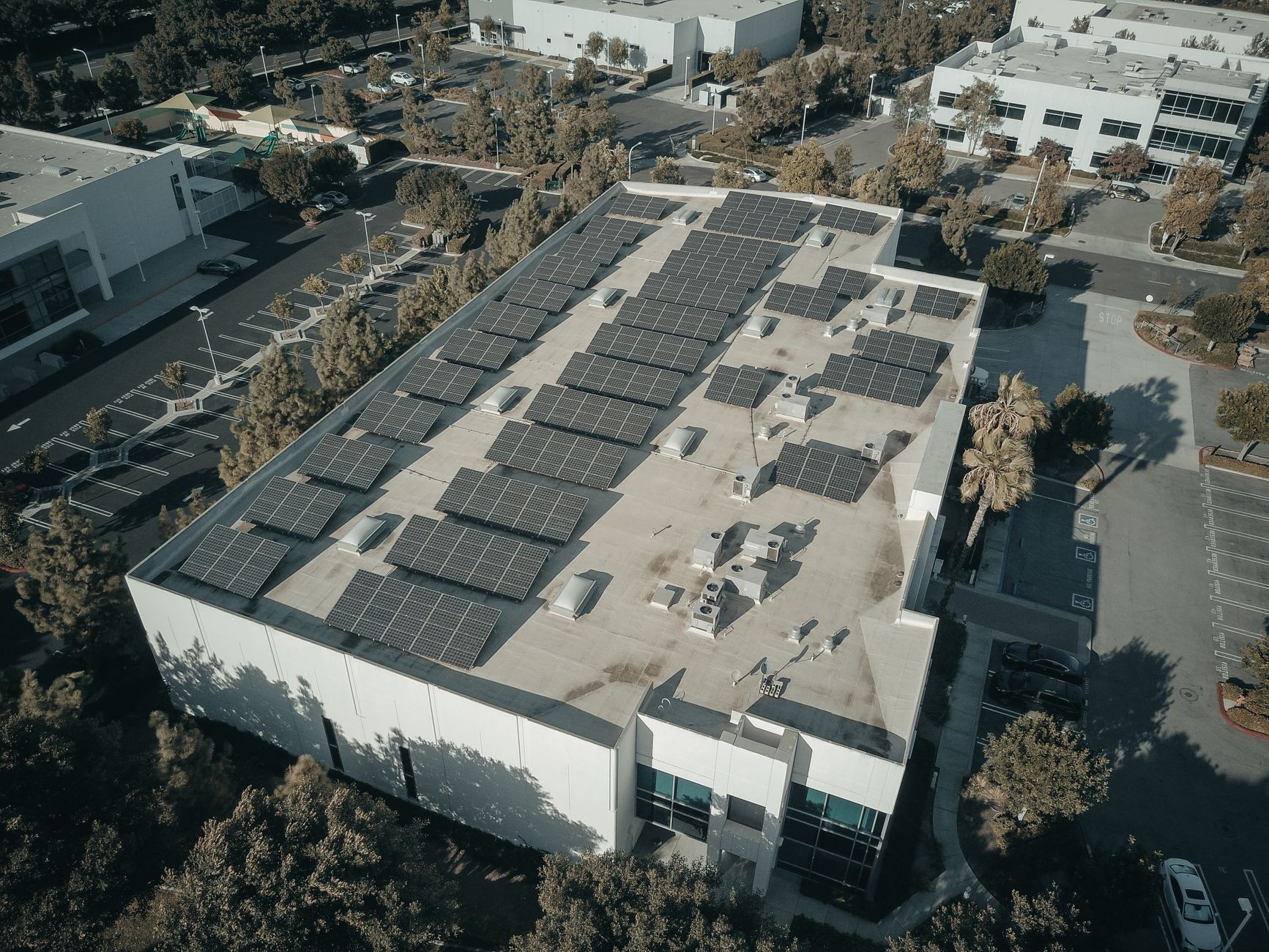

The Property Manager's Perspective on Commercial Solar
Property managers evaluating solar are operating in a different frame than owner-operators who consume all the energy they produce. When you manage a multi-tenant retail center, an industrial park, or a mixed-use commercial property, the questions around solar get more layered: who benefits from the electricity savings, how does solar affect lease negotiations, and how do you make a decision that works across properties with different tenants, leases, and electrical configurations?
Gross Lease vs. Net Lease Properties
The ownership and financial structure of solar on a commercial property depends significantly on whether the property operates under gross or net leases. Under a gross lease, where the landlord pays utilities, solar savings flow directly to the landlord — the incentive to invest is clear. Under a net lease structure, where tenants pay their own electricity directly to the utility, the solar savings go to whoever owns the system and is credited for production. Some property managers structure solar projects so the landlord owns the system and sells power to tenants through a PPA arrangement, effectively creating a new revenue line from energy. The legal and operational complexity of that arrangement varies by jurisdiction and lease structure.


Common Area Loads as an Entry Point
For properties with net leases where solar economics are more complex to route to tenants, common area loads — parking lot lighting, HVAC for common areas, shared electrical systems — represent a straightforward application. The property owner pays those utility bills directly and can offset them with solar production allocated to common area meters. This is often a simpler starting point than attempting to restructure tenant energy relationships.
Multi-Property Coordination
Property managers overseeing portfolios of commercial properties have an opportunity to standardize solar program design across similar building types, which reduces per-property engineering costs and creates consistent O&M terms. A single maintenance provider across multiple properties also simplifies reporting and issue escalation. The trade-off is that standardized designs may not perfectly optimize each individual site — a judgment call that depends on how similar the properties actually are in load profile, roof condition, and utility rate structure.
What to Clarify Before Committing to Any Installation
- Which meters and tenants are affected, and how do existing lease terms address utility changes?
- What happens to the solar system if a major tenant leaves or a property is sold?
- Who handles O&M, and is that the same organization that installs the system?
- How does the project affect the property's insurance coverage and valuation?
OM Energy works with property managers across Riverside County and the Inland Empire on commercial solar projects that account for the ownership and lease context from the start. Designing a system that works financially for the property manager — not just technically for the roof — requires understanding that context before the first line of the design is drawn.