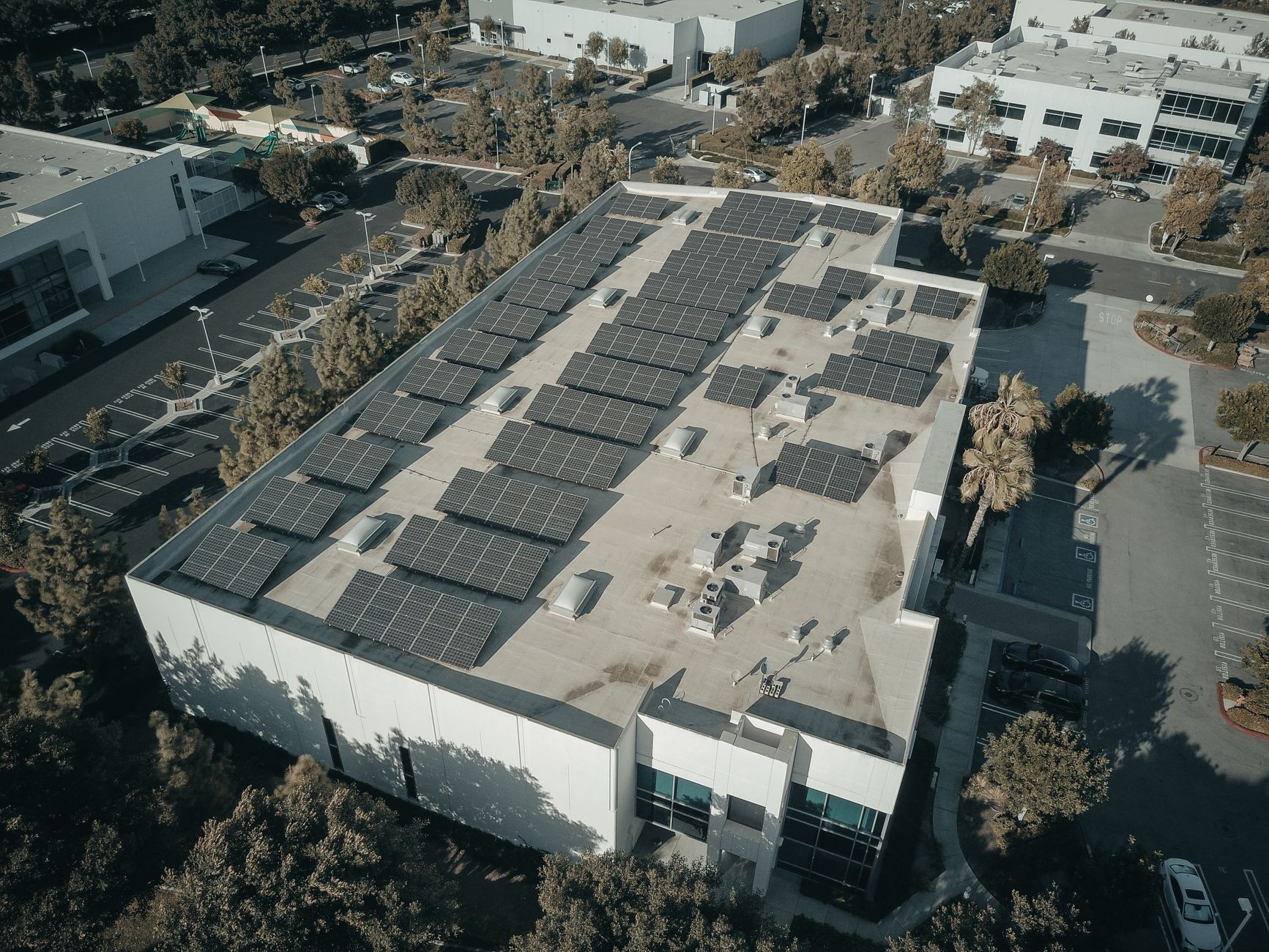
If you're building, expanding, or substantially renovating a commercial property in California, there's a section of the building code that will shape your electrical and roofing decisions whether you plan for renewable energy or not. It's called Title 24 — the state's Building Energy Efficiency Standards — and over successive updates it has moved from encouraging solar and EV readiness to requiring them for a growing share of commercial construction.
For facility owners, the practical takeaway is simple: renewable energy is increasingly not an optional add-on you bolt on later. It's something the code expects you to design for from the start. Understanding that early saves money, avoids permitting delays, and keeps you from paying twice.
What Title 24 covers
Title 24 governs how efficiently new and altered buildings use energy — insulation, lighting, HVAC, and, increasingly, on-site generation and electric-vehicle infrastructure. It's updated on a regular cycle, and each cycle has tightened expectations around solar and electrification for nonresidential buildings.
The rules vary by building type, size, and climate zone, and Southern California facilities generally fall into the zones where solar performs well and requirements are meaningful. Because the specifics change with each code cycle, the right move is always to confirm the current requirements for your building type before design begins — but the direction of travel is unmistakable.
Solar-ready vs. solar-required
Two related concepts trip up a lot of owners.
Solar-ready means the building must be designed so a solar system can be added easily later: adequate unshaded roof area reserved, conduit pathways run, and electrical capacity planned. Even where a system isn't installed on day one, you're expected to leave the door open for one.
Solar-required goes further, mandating that qualifying new buildings actually install a photovoltaic system, often paired with battery storage, sized to the building. For many nonresidential project types, California has been steadily expanding which buildings fall into this category.
The cost difference between planning for these upfront and retrofitting later is significant. Reserving roof space and running conduit during construction is cheap. Tearing into a finished building to add capacity you didn't plan for is not.
The EV-ready piece
Title 24 also sets requirements for electric-vehicle charging infrastructure in many commercial parking facilities. Buildings are typically required to provide a mix of fully installed EV chargers plus additional "EV-capable" spaces — parking stalls pre-wired with the conduit and panel capacity to add chargers as demand grows.
This matters because charging infrastructure is dramatically cheaper to rough in during construction than to add afterward, when it means trenching through finished parking lots. Owners who treat EV-ready requirements as a nuisance often end up paying far more later; owners who plan for them can position charging as an amenity or revenue source.
Why this is a design decision, not a compliance afterthought
The mistake we see most often is treating Title 24's renewable provisions as a box the architect checks at the end. In reality, solar, storage, and EV readiness touch roof structure, electrical service sizing, panel locations, and parking layout — decisions that are locked in early. Handle them late and you either overspend to comply or leave capacity on the table you'll wish you had.
Done well, the same requirements become an opportunity. A building designed from the start for solar and storage can lower operating costs for decades, hedge against rising utility rates, and carry infrastructure that makes the property more valuable and more leasable.
Where a single accountable team pays off
Title 24 compliance sits at the intersection of architecture, electrical engineering, solar design, and permitting — which is exactly where projects fall apart when responsibility is split across vendors who don't talk to each other. The architect assumes the solar contractor will handle it; the solar contractor assumes the electrical plans already accounted for it; the owner finds out at inspection that something was missed.
OM Energy works as one accountable team across design, permitting, installation, and long-term support, with no handoffs. When renewable readiness is baked into the project from the first set of drawings, compliance stops being a scramble and becomes part of a system that actually serves the building.
What to do next
If you have a commercial project on the horizon — new construction or a major renovation — bring the renewable energy conversation into the earliest design meetings, not the last. Confirm which current Title 24 provisions apply to your building type and climate zone, and make sure roof, electrical, and parking decisions reflect them from the start.
The owners who come out ahead aren't the ones fighting the code. They're the ones using it as a prompt to build infrastructure that lowers costs long after the ribbon is cut.
Planning a build or renovation? OM Energy can help you get Title 24's solar and EV-ready requirements right from the design phase forward — one team, start to finish.