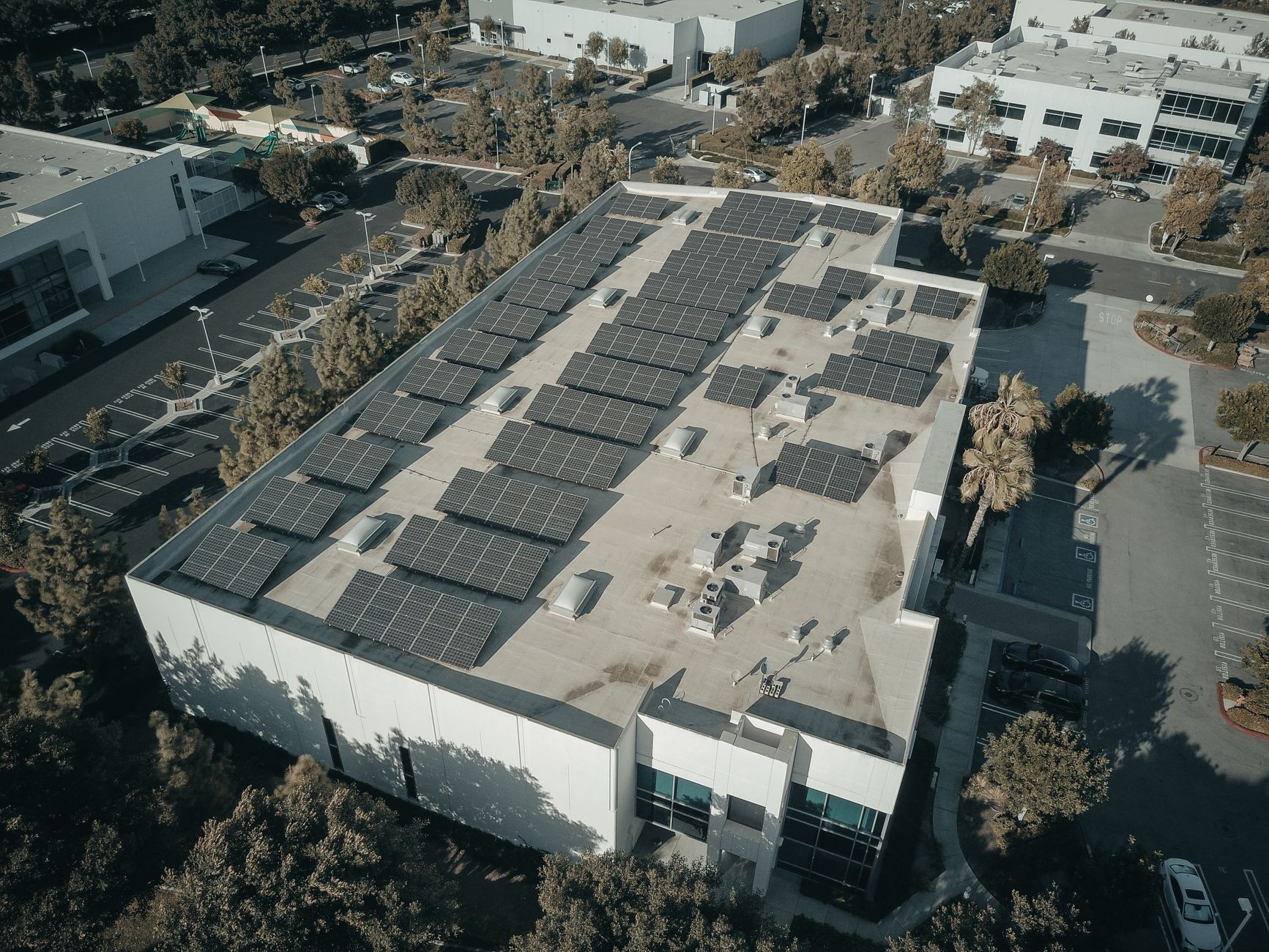

Why Warehouses Are Structurally Attractive for Commercial Solar
Large distribution centers, logistics facilities, and industrial warehouses share a set of physical and operational characteristics that align well with commercial solar. The roof areas are typically large and relatively unobstructed by HVAC equipment, skylights, or other penetrations that can limit usable solar area on office or retail buildings. The buildings are often single-story, which simplifies structural load analysis. And the operations running inside — lighting, refrigeration, conveyor systems, dock equipment, climate control — draw significant power during daylight hours when a rooftop solar array is producing at its peak.
Roof Condition Is the Most Important Early Question
Warehouse roofs are a heterogeneous asset class. Some are well-maintained TPO membranes that are a decade or less old. Others are aging built-up or modified bitumen roofs that are past their optimal life. Installing a solar array on a roof that will need replacement within five years creates a costly problem: the solar system has to come off and go back on for the re-roofing, adding expense and potential for damage. A serious solar contractor assesses roof condition before design begins. If the roof needs attention, addressing it prior to solar installation — or as a coordinated project — is the right sequence.


Structural Assessment for Ballasted vs. Penetrating Systems
Large commercial roofs often use ballasted mounting systems that hold the solar array in place with weight rather than roof penetrations. Ballasted systems require a structural analysis to confirm the roof can support the added load. Some older warehouse structures were designed to load specifications that limit the amount of additional weight they can carry; this is particularly relevant for tilt-up concrete buildings common in Inland Empire industrial parks. A structural engineer's review is part of a complete commercial solar assessment and should not be skipped to reduce soft costs.
Electrical Infrastructure for Large Systems
Warehouse solar systems are often large — hundreds of kilowatts in many cases. Systems of that scale require careful attention to the existing electrical infrastructure: service entrance capacity, switchgear, and the availability of space for inverters and associated equipment. Designs that do not account for existing infrastructure constraints produce change orders during installation, which are more expensive than resolving the questions during engineering.
Planning for EV Charging and Battery Storage
- Logistics and distribution operations are electrifying fleets; planning for EV charging infrastructure at the time of solar design avoids a costly retrofit later.
- Demand charge management through battery storage is particularly valuable for warehouse facilities with sharp load peaks from dock equipment and refrigeration startup sequences.
- A unified energy infrastructure design — solar, storage, and EV charging — coordinates interconnection and electrical upgrades in a single project scope.
OM Energy works with warehouse and industrial property owners across the Inland Empire and Riverside County on full-scope solar, storage, and EV charging installations. Projects start with a real assessment — roof, structure, and electrical — before any system is specified.