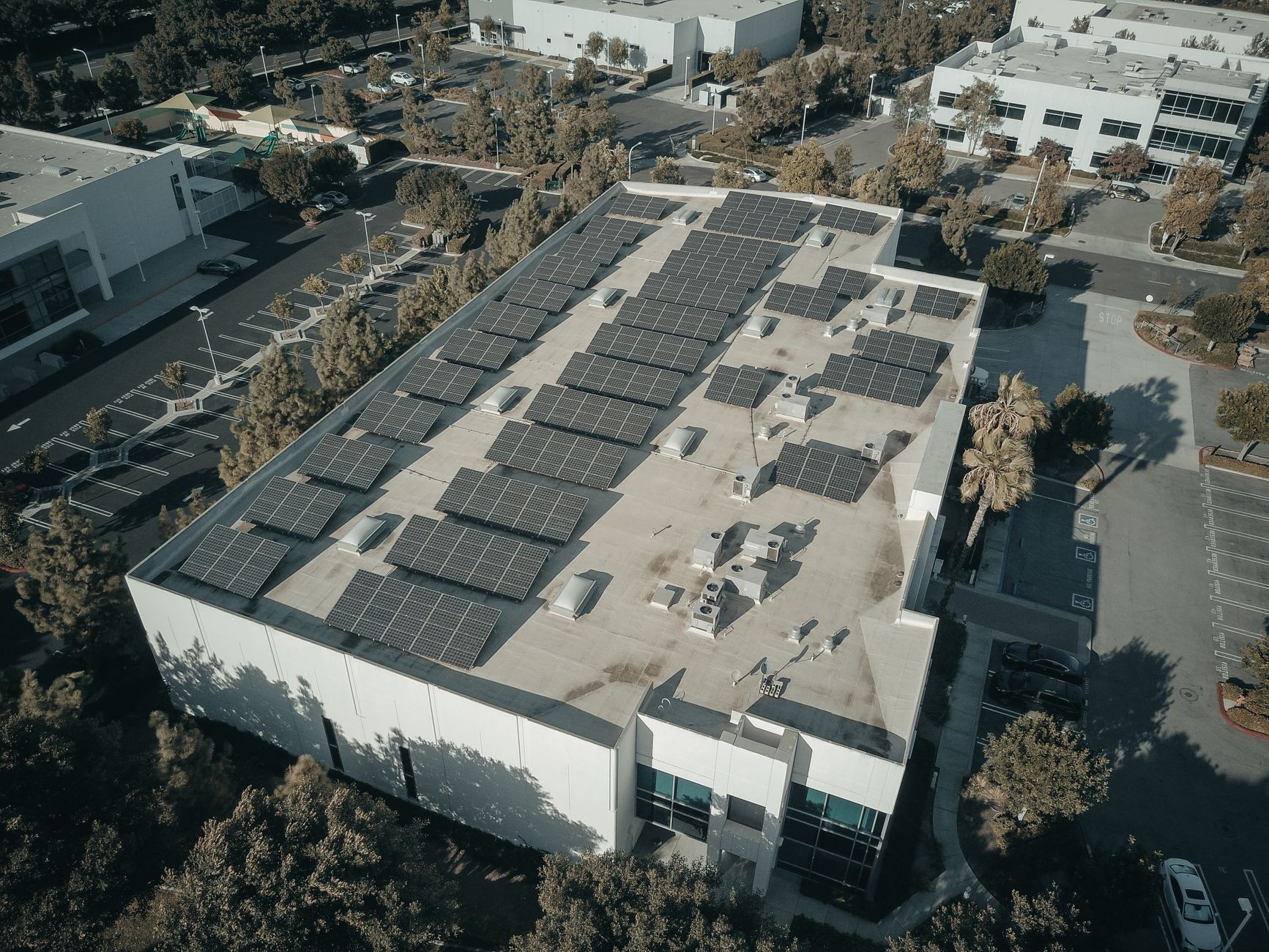
If you run a commercial facility in Southern California, look closely at your utility bill and you'll likely find two very different kinds of charges. One is for the energy you use — the kilowatt-hours that power your lights, machines, and HVAC. The other is for how fast you use it at your single busiest moment of the month. That second charge is the demand charge, and for many commercial and industrial facilities it quietly accounts for a substantial slice of the total bill.
Most owners never think about it, because nothing on the floor tells you it's happening. But understanding demand charges — and what battery storage can do about them — is one of the highest-leverage moves a facility owner can make.
What a demand charge actually measures
Energy charges are cumulative: use more over the month, pay more. Demand charges work differently. The utility looks at your peak power draw — usually measured in 15-minute intervals — and bills you based on the single highest interval in the billing period. Hit one sharp spike when three compressors, the HVAC, and a charging bank all kick on at once, and that momentary peak can set your demand charge for the entire month, even if it lasted only a few minutes.
That's why two facilities using the same total energy can pay very different bills. The one with spikier, less predictable demand pays more.
Why solar alone doesn't solve it
Solar is excellent at reducing energy charges — it offsets kilowatt-hours during daylight. But solar doesn't reliably cut demand charges, because your peak often lands at a moment the panels can't cover: a cloudy stretch, an early-morning startup, or an evening ramp after the sun drops. Under California's current net-billing rules, the value of exporting midday solar has also fallen, which makes when you use and store energy matter more than ever.
This is where storage changes the math.
How batteries shave the peak
A commercial battery system sits between your facility and the grid and watches your load in real time. When it sees demand climbing toward a costly peak, it discharges — supplying power from stored energy instead of pulling that surge from the utility. The grid sees a flatter, lower peak. Your demand charge drops accordingly.
The industry term is "peak shaving," and the appeal is that it works quietly in the background. The battery charges when power is cheap or when your solar is overproducing, then stands ready to cover your spikes. Done well, it can take the jagged top off your demand profile without you changing a single thing about how you operate.
Batteries also unlock a second benefit: load shifting. You can store inexpensive or self-generated energy and use it during expensive time-of-use windows, trimming energy charges on top of demand charges.
Getting the sizing right is the whole game
Here's the part that separates a system that pays for itself from one that disappoints: battery storage for demand management has to be sized to your actual load shape, not a generic estimate. Too small, and it runs out mid-peak and lets the spike through anyway — you paid for a battery and still got the charge. Too large, and you've spent capital you didn't need.
Getting it right means pulling your interval data from the utility, studying when and how your peaks actually happen, and modeling how a battery would have performed against a real year of your operations. That's an engineering exercise, not a catalog purchase.
Where the "one team" difference shows up
Demand management is exactly the kind of project where fragmented contractors cost owners money. The company that sells you panels may not understand your demand profile. The electrician may not size the battery to your load. And when performance falls short, everyone points at someone else.
At OM Energy, design, permitting, installation, and long-term support all sit under one roof, with no handoffs. That means the people who model your demand profile are accountable for the system that's supposed to fix it — and they're still there years later to make sure it keeps performing as your load changes.
What to do next
If you've never looked at the demand-charge line on your bill, start there. Then ask for your interval data from the utility — it's the raw material for any honest analysis. From there, a proper load study will tell you whether storage makes sense for your facility, how big it should be, and roughly what it should save.
Demand charges aren't going away, and under current California rate structures they're only getting more important. The facilities that get ahead of them are the ones treating storage as a financial tool, not just a backup battery.
Want to know what your demand charges are really costing you? OM Energy can review your interval data and model what storage would do for your specific facility — one accountable team, from analysis through installation and support.