Every California business owner has learned the same lesson the hard way: the grid is not guaranteed. Between Public Safety Power Shutoffs during fire season, heat-driven strain in late summer, and aging infrastructure, unplanned outages have become a normal operating risk rather than a rare event. For a commercial facility, a few hours without power can mean spoiled inventory, halted production, idle staff, locked-out customers, and lost revenue that never comes back.
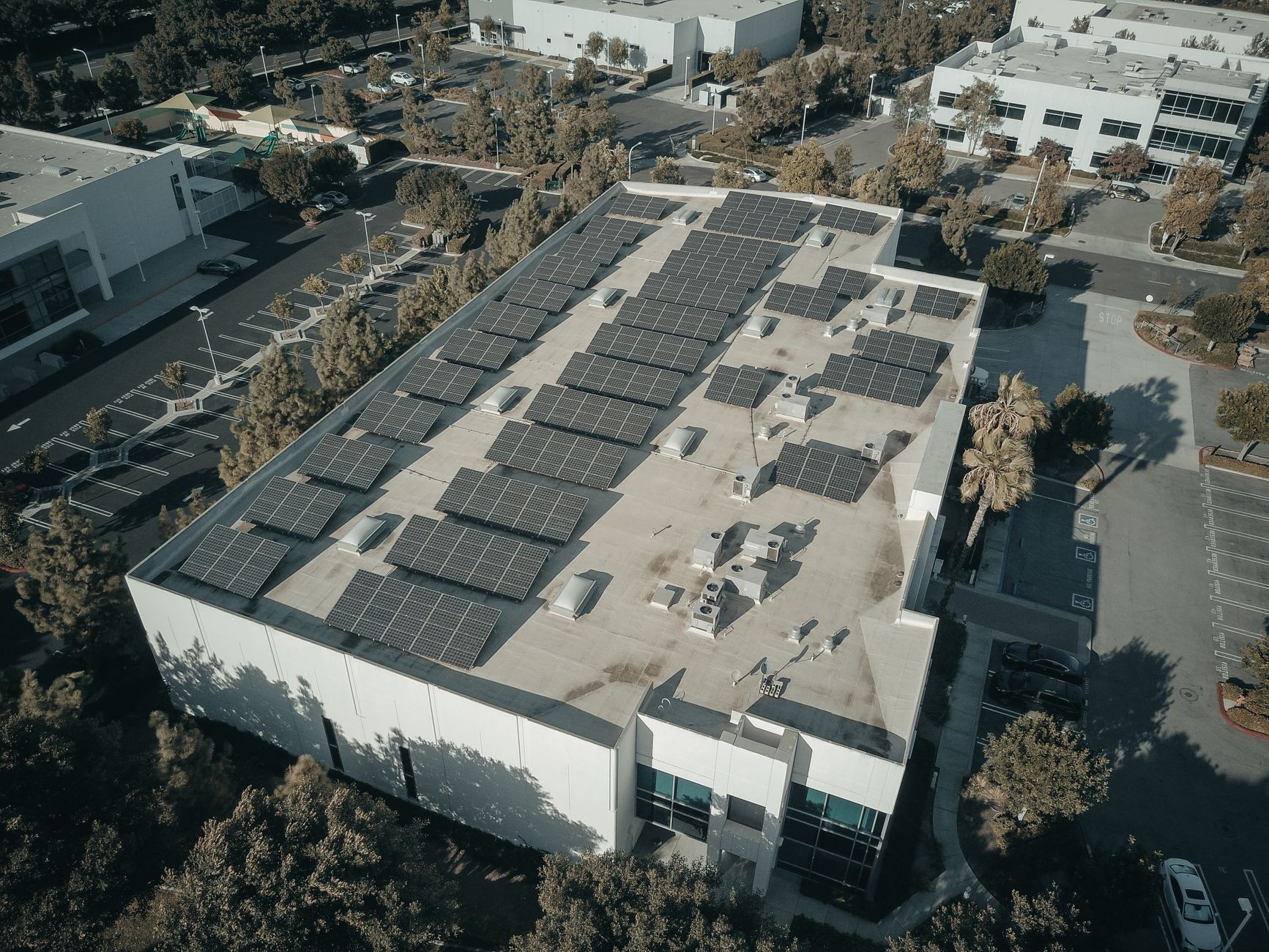
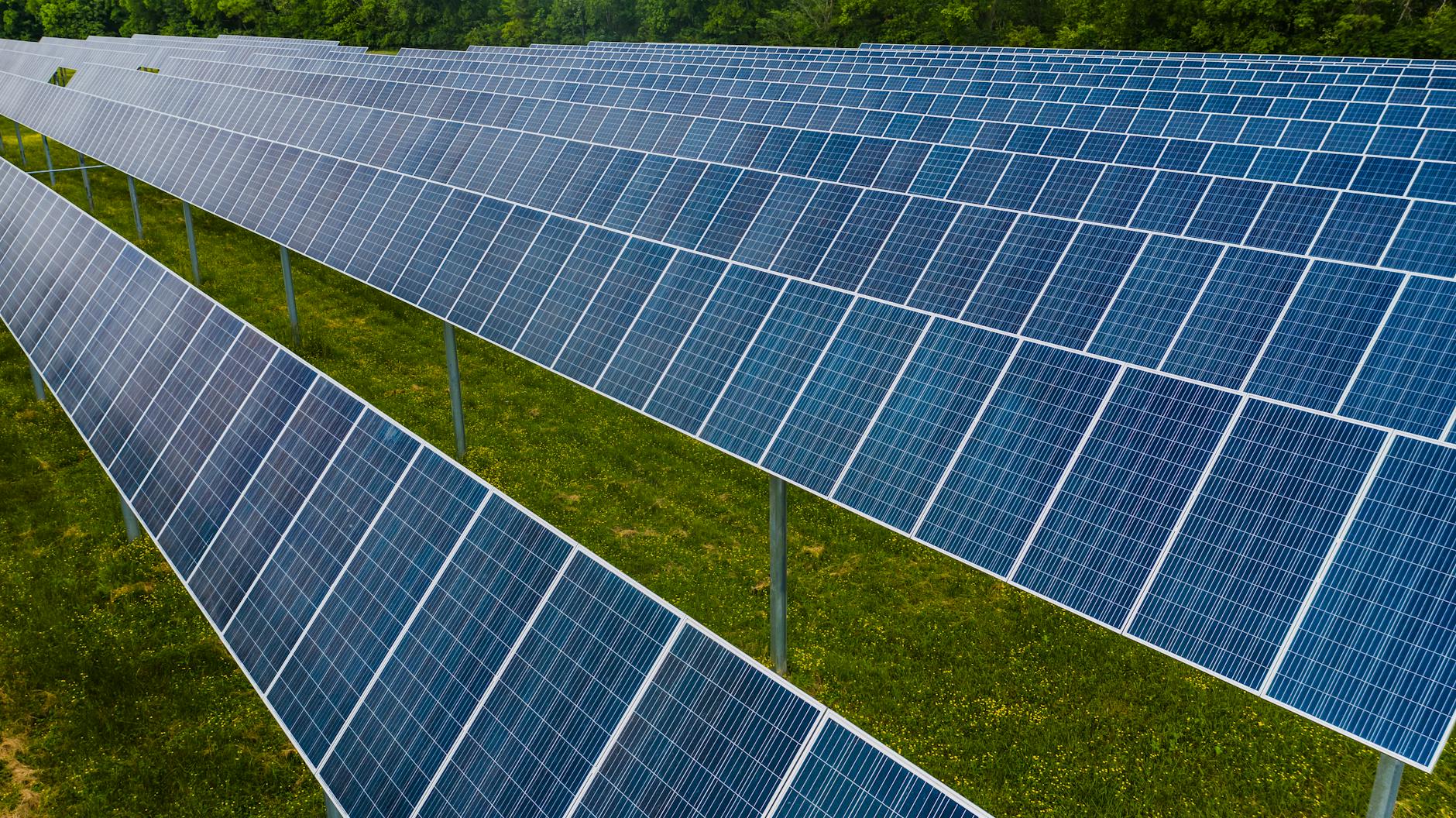
The traditional answer was a diesel generator humming in the parking lot. It still has a place, but for a growing number of facilities there's a better option: a microgrid built around solar and battery storage that keeps critical operations running when the utility can't.
What a microgrid actually is
A microgrid is a self-contained energy system that can operate connected to the utility grid or independently from it. Most days it runs in parallel with the grid — your solar offsets energy costs, your battery manages demand charges and time-of-use rates. But when the grid drops, the microgrid "islands": it disconnects and keeps powering your facility from stored energy and on-site generation until the grid returns.
The key word is seamless. A well-designed system transitions in a fraction of a second, so sensitive equipment, refrigeration, servers, and controls never see the gap. Your team may not even notice the outside world went dark.
Why solar plus storage beats a generator alone
Generators are reactive: they sit idle burning nothing until an outage, then run on fuel you have to store, deliver, and maintain. A solar-and-storage microgrid earns its keep every single day by lowering your energy and demand costs — then delivers resilience as a bonus when you need it.
It's also quieter, cleaner, and free of the fuel-logistics headache. During a multi-day event, batteries can recharge from your solar array each afternoon, extending how long you can ride out an outage without a single fuel delivery. For facilities that can't tolerate emissions, noise, or refueling — or that simply want their resilience investment to pay for itself the other 360 days a year — the math increasingly favors storage.
That said, this isn't an either/or for every site. Some facilities pair storage with a right-sized generator for extended outages. The point isn't to pick a hero technology; it's to design the resilience your specific operation needs.
The first question: what has to stay on?
Backup power is a spectrum, not a switch. The most important early decision is defining your critical loads — the circuits that absolutely cannot go dark. Refrigeration and cold storage. Security and access control. Point-of-sale and networking. Life-safety systems. Production equipment that's expensive or dangerous to shut down mid-cycle.
Not everything needs backup, and trying to cover every outlet drives the system size — and the cost — through the roof. A good design draws a clear line between what must stay on, what's nice to keep on, and what can wait for the grid. That prioritization is where an experienced designer saves you real money.
Sizing for the outage you actually face
How big the battery needs to be depends on two things: how much power your critical loads draw, and how long you need to sustain them. A facility that needs four hours of coverage to safely shut down is a very different design from one that needs to run through a three-day fire-season shutoff.
Answering that honestly requires understanding your loads, your local outage patterns, and how much solar you can generate to recharge during a prolonged event. This is engineering, not guesswork — and getting it wrong in either direction is expensive.
Where accountability matters most
A microgrid ties together solar, storage, controls, switchgear, and often existing backup equipment — with permitting and utility interconnection layered on top. When those pieces come from different vendors, the seams are where resilience projects fail. The system that's supposed to protect you during your worst day can't have a "that's not my part" problem baked into it.
OM Energy designs, permits, installs, and supports the entire system as one accountable team, with no handoffs. When the grid goes down, there's one number to call and one team that knows exactly how your system was built — because they built all of it.
What to do next
Start by listing what an outage actually costs your business per hour, and which systems you can't afford to lose. That single exercise usually makes the case for resilience clearer than any sales pitch. From there, a proper assessment of your loads and local outage risk will show whether a solar-and-storage microgrid is the right fit and how it should be sized.
The grid's reliability isn't improving on its own. The facilities that stay open when their competitors go dark are the ones that planned for it.
Worried about the next shutoff? OM Energy can assess your critical loads and design a backup strategy built around solar and storage — one team, from design through the day you need it most.