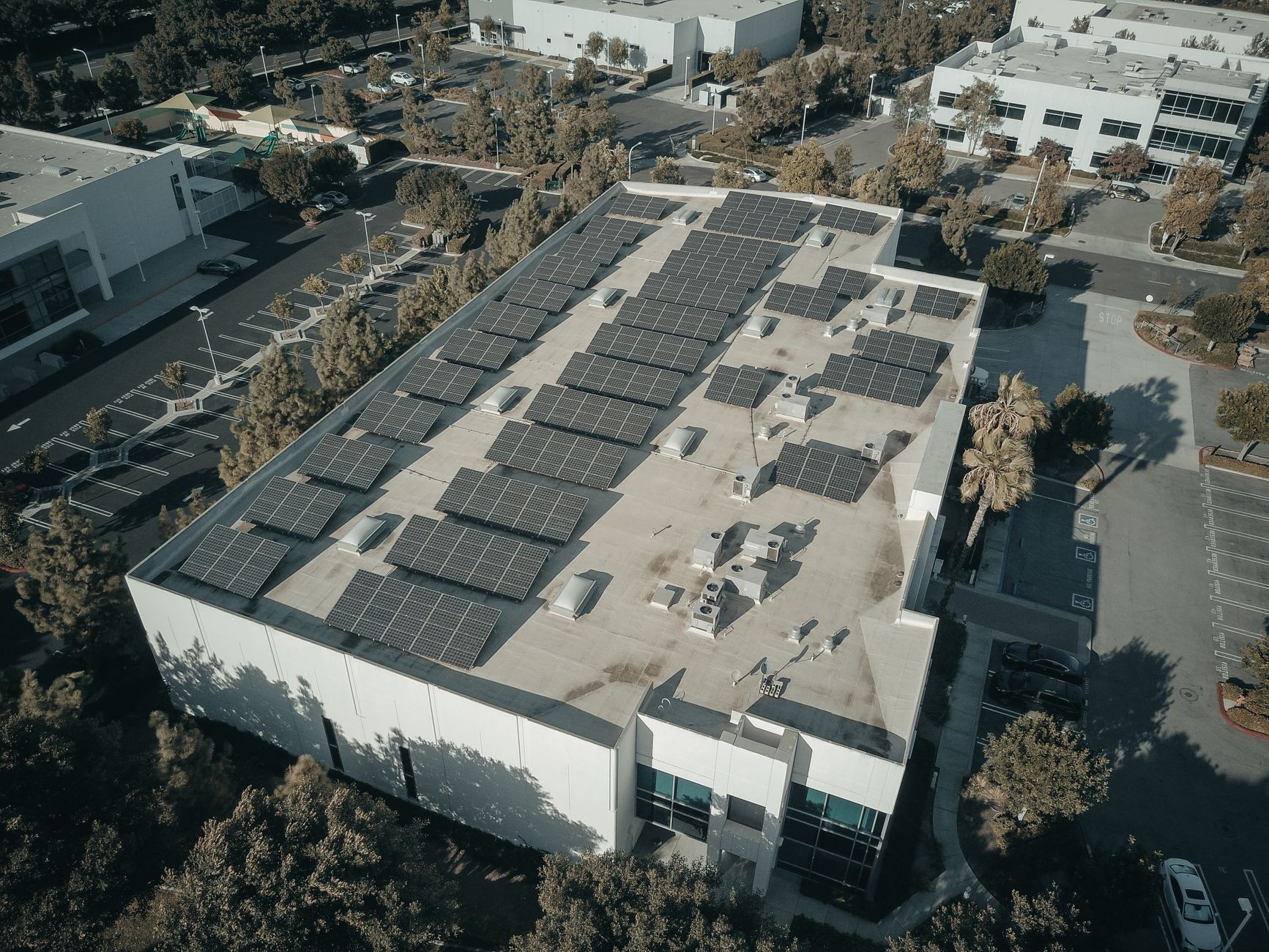
There is a structural problem with solar on leased commercial property, and it stops more projects than technical constraints do.
The owner pays for the system. The tenant pays the utility bill. So the party writing the check for the array is not the party who sees the savings. In a triple-net lease, where the tenant is responsible for utilities along with taxes and insurance, this is the default arrangement.
Economists call it a split incentive. Landlords call it the reason the proposal has been sitting on the desk for eight months.
It is solvable, but it requires deciding on a structure before you design a system.
Start by reading your actual leases
Before evaluating any approach, someone needs to read the lease documents for the building in question. The relevant provisions:
Who pays for utilities, and how are they metered? Master-metered buildings with pro-rata allocation behave very differently from buildings where each tenant has a direct utility account.
What are the rules on capital improvements and how they are recovered? Many leases allow the owner to pass through certain capital costs, sometimes with conditions around whether the improvement reduces operating expenses.
Who controls the roof? Some leases grant tenants rights over roof space or roof equipment that affect what an owner can install unilaterally.
When do the leases expire? A structure that depends on a specific tenant relationship is fragile if that tenant leaves in three years.
These answers narrow the options considerably, and they are worth having before anyone produces a proposal.
The structures owners actually use
Owner installs, tenant benefits, owner recovers through rent. The simplest version. The owner pays for the system and adjusts rent — at renewal, or through a negotiated amendment — to capture some of the value. Works best with a stable tenant who intends to stay and who values the reduced operating cost.
The negotiation is easier when you can show the tenant real numbers: their utility savings versus the rent adjustment. If the tenant nets out ahead, the conversation is straightforward. If not, it will not close.
Owner installs and sells power to the tenant. The owner installs the system and bills the tenant for the power it produces, typically at a rate below the utility's. The tenant saves relative to the grid; the owner earns a return.
Be aware that selling power to another party has regulatory implications in California and specific requirements around metering, billing, and disclosure. This structure works, but it should be set up with counsel who has done it before, not improvised.
Capital improvement pass-through. If your lease permits recovering capital expenditures that reduce operating expenses, solar may qualify. Check the specific language — many leases cap the recovery, amortize it over a defined period, or exclude certain categories.
Owner-occupied common areas only. In multi-tenant buildings, the owner often pays for common area load: lighting, elevators, HVAC for shared space, parking. A system sized to offset common area consumption alone avoids the split incentive entirely, because the owner both pays and benefits. Smaller project, cleaner economics, no negotiation required.
This is an underused option, and it is often the right starting point for owners who want to move now rather than renegotiate leases.
Green lease provisions at renewal. Rather than solving this on the existing lease, some owners write cost-and-benefit sharing into new leases as they turn over. Slower, but it addresses the problem structurally across a portfolio.
Where the tax benefits land
Worth flagging plainly: the federal investment tax credit and depreciation benefits generally flow to the party that owns the system and has the tax position to use them. For an owner without sufficient tax appetite, third-party ownership structures like a PPA or lease may capture value that would otherwise be lost.
This is genuinely a question for your CPA and your tax counsel, not for a solar contractor. Anyone who gives you a confident answer about your specific tax position without seeing your returns is guessing.
Practical advice for portfolio owners
If you manage multiple properties, do not try to solve every building at once. A better sequence:
Identify the buildings you occupy yourself or where you carry the utility cost. Those have no split incentive and are the easiest wins. Then look at buildings with large common area loads. Then look at buildings with long-term, stable tenants where a negotiated structure is realistic. Buildings with short remaining lease terms and fragmented tenancy go last.
That sequencing gets systems installed and producing while the harder negotiations proceed on their own timeline.
What we can and cannot help with
We can tell you what each building will produce, what it will cost, how the roof and electrical service hold up, and what the load data supports. That is the engineering and the numbers.
The lease structure itself belongs to you, your attorney, and your CPA. What we can do is make sure the technical proposal fits whatever structure you choose rather than forcing you into one that suits the installer.
If you own or manage commercial property in Southern California and want to know which buildings in your portfolio are worth starting with, that is a useful conversation to have early.