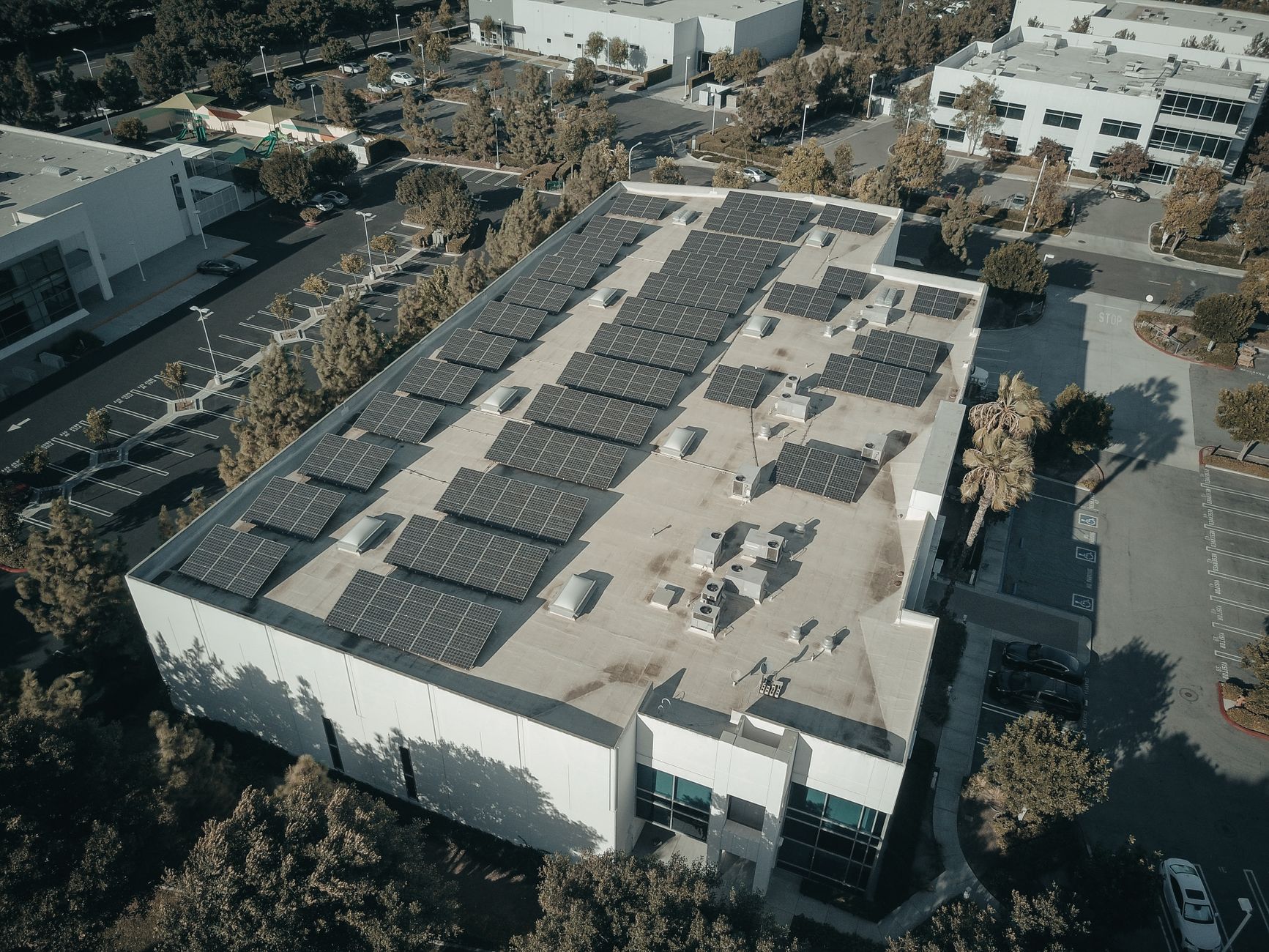
Not every building has a roof that's right for solar. Some are too old, some are too crowded with equipment, and some just don't have enough space to cover the load.
But most commercial properties in California have something else: a parking lot sitting in full sun all day.

A solar carport turns that lot into a power plant. It's a raised structure that covers parking spaces with solar panels, so you generate electricity and give vehicles shade at the same time.
When a carport makes more sense than the roof
Carports are worth a serious look when:
- The roof is near the end of its life and you don't want to remove panels later to re-roof
- The roof is crowded with HVAC units, vents, skylights, or other equipment
- The roof can't cover your load, which is common for facilities with heavy power use
- You lease the building and the roof belongs to the landlord, but you have rights to the parking area
- You're adding EV charging, since chargers can be built right into the carport structure
Many projects use both: panels on the roof where it works, and carports to make up the rest.
What's different about building a carport
A carport is a structure, not just an install. That changes the project in a few ways:
- Engineering and foundations. Carports need structural design and footings, and soil conditions matter. Underground utilities have to be located before any digging.
- Permitting. Expect structural review on top of the electrical permit. Some cities also look at lighting, drainage, and fire department access.
- Lighting and drainage. Lighting under the canopy keeps the lot safe at night, and runoff from the panels has to go somewhere.
- Clearance and layout. The structure needs to clear delivery trucks, emergency vehicles, and any other tall vehicles that use the lot.
- Construction phasing. The lot stays in use during the build, so work is planned in sections to keep parking available.
These steps take time, which is why carport projects usually run longer than a comparable rooftop system.
The benefits beyond the power bill
Shaded parking is something employees, customers, and tenants notice. Cars stay cooler in summer, and covered spaces can be a real amenity for a retail center, office park, or multifamily property.
Pairing carports with battery storage can cut demand charges and keep critical loads running during an outage. Pairing them with EV charging lets you add chargers without tearing up your lot twice.
Timing matters
The federal tax credit for commercial solar has a firm deadline. Projects that didn't begin construction by July 4, 2026 need to be placed in service by December 31, 2027 to qualify. Since carports involve more engineering and permitting than a rooftop install, the earlier you start, the better your odds of making it.
One team from design to maintenance
OM Energy handles design, engineering coordination, permitting, installation, and long-term maintenance for solar carports, rooftop systems, battery storage, and EV charging. One team watches the schedule from the first site walk to the day the system turns on.
Schedule a consultation or call (951) 228-2710, and we'll look at your lot, your roof, and your usage to find the right fit.
This article is general information, not tax advice. Confirm tax credit eligibility with your tax advisor.