Why Commercial EV Charging Has Become a Near-Term Facilities Decision
The adoption of electric vehicles by employees, customers, and fleet operators has moved from a distant planning horizon to an active facilities issue for many commercial property owners in California. State mandates affecting new construction, tenant expectations, and the competitive positioning of commercial real estate against properties that already offer charging have all accelerated the timeline. For facility owners and property managers, the question has shifted from whether to install EV charging to how to do it without creating electrical infrastructure problems down the road.
The Electrical Capacity Question
Commercial EV chargers — particularly Level 2 AC chargers and DC fast chargers — draw significant power. A property that was wired for its original load profile may not have the panel capacity or service entrance amperage to support a meaningful number of charging stations without an electrical upgrade. The scale of that upgrade, and its cost, varies substantially based on the building's existing infrastructure. A credible EV charging installation starts with an electrical assessment, not a hardware proposal.


Level 2 vs. DC Fast Charging for Commercial Properties
Level 2 charging — 240-volt AC, typically 7 to 19 kW per port — is appropriate for most commercial property applications: employee parking, customer parking at retail and hospitality properties, and fleet vehicles that park for multiple hours. DC fast charging, which can deliver 50 kW or more per port, is suited to use cases where vehicles need meaningful charge in 30 minutes or less. The hardware and electrical infrastructure costs differ substantially, so matching the charging technology to the actual use case prevents over-investment in infrastructure that most users will not utilize.
Integration With Solar and Storage
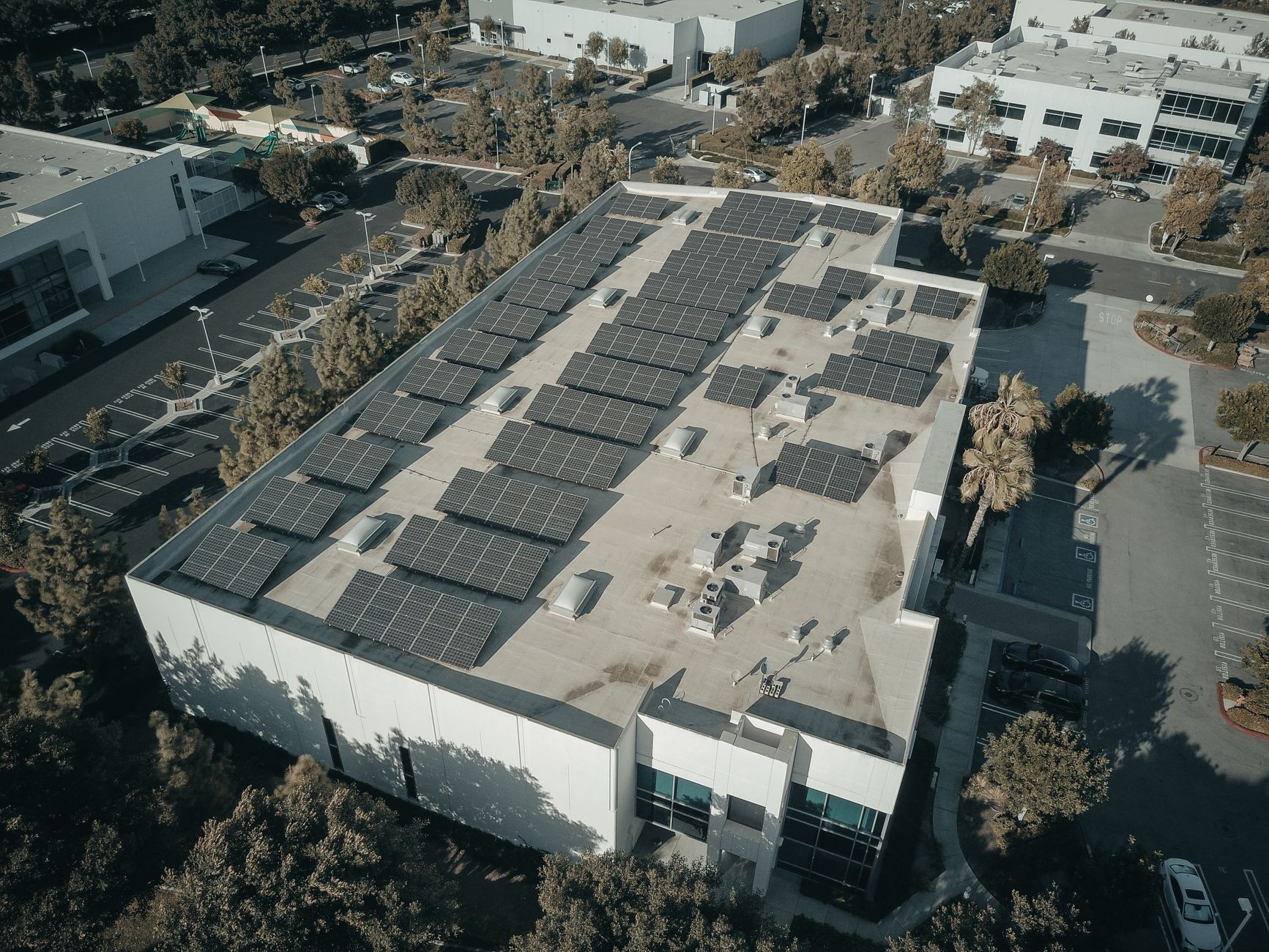
Commercial properties that have solar installed — or are planning to install it — can integrate EV charging into the energy design from the start. Solar can offset the energy cost of charging during daytime hours. Battery storage can time-shift charging load away from peak demand periods. A unified design that accounts for solar, storage, and EV charging produces better results than adding each layer independently after the previous one is already installed.
Permitting and Utility Coordination
- EV charging installations require electrical permits and inspections through the local building department.
- Larger installations may require utility notification or approval for service capacity changes.
- California provides some incentive programs for commercial EV charging through utility and state programs — availability varies by program cycle.
OM Energy designs and installs commercial EV charging infrastructure as part of its end-to-end energy services offering. If your facility is planning for EV charging, a conversation about your current electrical capacity and future energy infrastructure should happen before any hardware is specified.