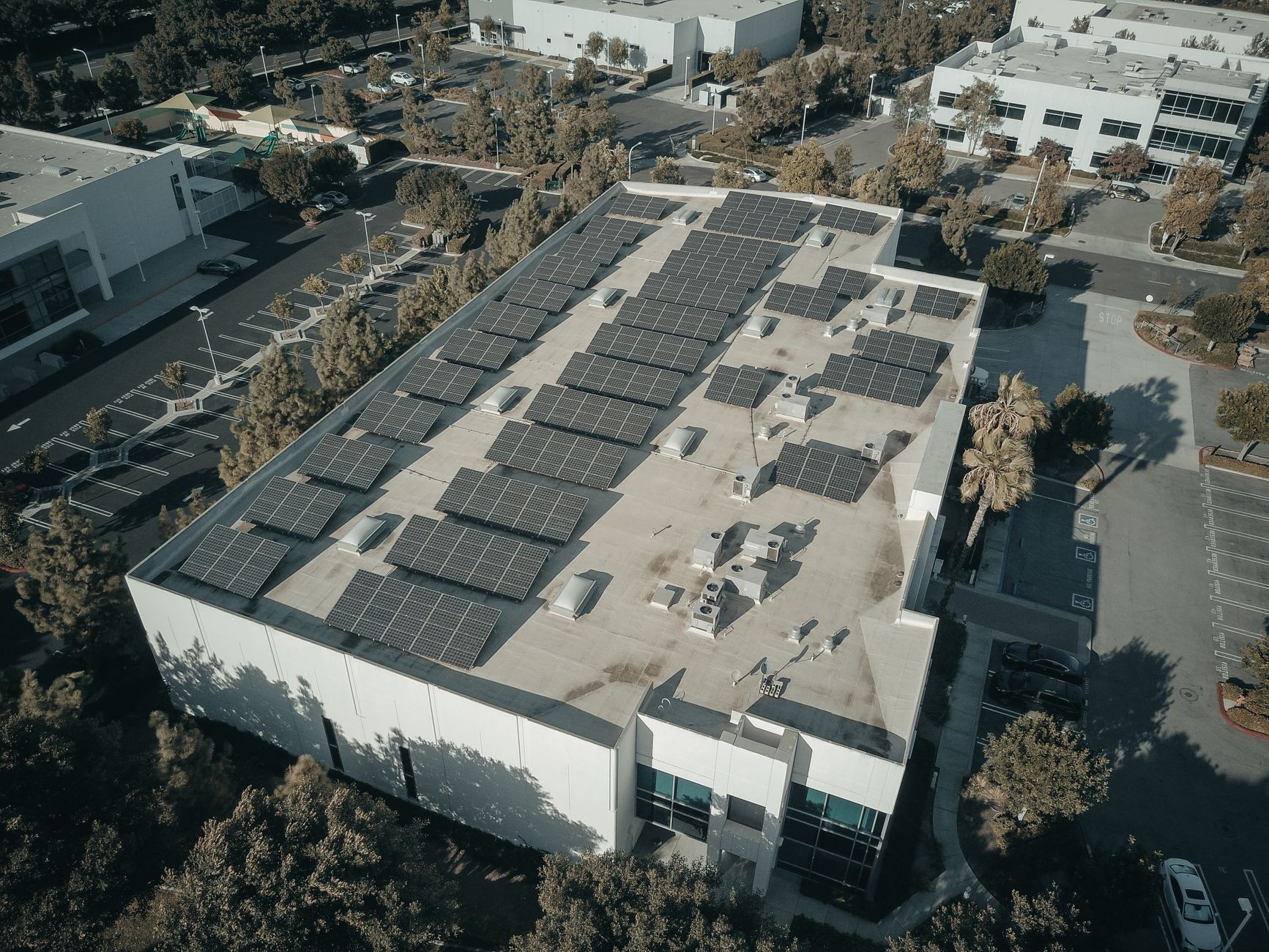
Two facilities can install the same solar system and end up with very different economics, simply because they paid for it differently. The financing structure decides who owns the equipment, who keeps the tax benefits, and whether solar shows up as an asset or an expense on your books.
For commercial owners in Temecula and across Southern California, here is how the four common financing paths compare, in plain terms, without the sales spin.

Option 1: Cash Purchase
Paying cash means you own the system outright from day one. You keep every financial benefit, including the federal Investment Tax Credit, depreciation, and any state incentives, and you keep all the energy savings.
- Best long-term return per dollar invested
- You claim the tax credit and depreciation directly
- No interest cost and no third party in the deal
- Requires capital up front and the ability to use the tax benefits
Cash works best for profitable businesses with tax appetite and available capital. If your company cannot use the tax benefits, a cash purchase leaves value unclaimed, which is the one scenario where paying cash is not clearly the strongest option.
Option 2: Solar Loan
A loan lets you own the system while spreading the cost over time. You still claim the tax credit and depreciation as the owner, and you keep the energy savings, minus the loan payment and interest.
- Ownership and tax benefits stay with you
- Little or no money down in many structures
- Payments often designed to be lower than the energy savings
- Interest reduces the lifetime return compared to cash
Loans suit owners who want ownership and tax benefits without tying up capital. The key question is whether the after-tax savings comfortably exceed the payment. A common structure uses the tax credit to pay down the loan in the first year or two, which lowers payments for the remaining term.
Option 3: Power Purchase Agreement (PPA)
Under a PPA, a third party owns the system on your roof and you simply buy the power it produces at an agreed rate per kilowatt-hour, usually below your utility rate. You put up no capital and you do not claim the tax benefits, because you do not own the equipment.
- No upfront cost
- You pay only for power actually produced
- The provider keeps the tax credit and depreciation
- Rates often escalate by a set percentage each year
A PPA fits facilities that cannot use tax benefits or do not want to own equipment. Watch the annual escalator closely, because a high escalation rate can erode savings over a long contract. A two to three percent annual increase compounds meaningfully across a twenty-year term, so the rate in year one is not the rate you should plan around.
Option 4: Operating Lease
A lease is similar to a PPA in that a third party owns the system, but you pay a fixed periodic lease payment rather than paying per kilowatt-hour. The lessor keeps the tax benefits.
- Predictable fixed payment
- No upfront capital
- Tax benefits stay with the lessor
- Payment is fixed regardless of how much the system produces
Leases appeal to owners who value budget predictability over maximizing every dollar of return. The trade is that you pay the same amount in a cloudy year as a sunny one, so you carry the production risk in exchange for a clean, fixed line item.
PPA vs Lease: The Real Difference
The two are often confused. The core distinction is what you pay for. A PPA charges you for energy actually produced, so a low-production month means a lower bill. A lease charges a fixed amount regardless of production, so you carry more of the performance risk but get a steadier number for budgeting.
Both keep the tax benefits with the third-party owner, which is the trade for putting up no capital. If your business can use the federal credit and depreciation, ownership through cash or a loan almost always returns more over the system's life, because you are not handing those benefits to someone else.
The Tax Benefits Are the Pivot Point
Notice the pattern across all four options. The single biggest factor is whether your business can use the federal Investment Tax Credit and depreciation. If it can, ownership through cash or a loan captures the most value. If it cannot, a PPA or lease lets a third party who can use those benefits pass some of the savings back to you in the form of a lower power rate or payment.
This is why the right answer is rarely universal. It depends on your tax position, not just the price of the system.
Which Structure Fits Your Facility
- Strong tax position and capital available: cash
- Want ownership without using capital: loan
- No tax appetite, no capital, prefer pay-as-produced: PPA
- No tax appetite, want a fixed predictable payment: lease
The right answer depends on your tax situation, your cost of capital, and how long you plan to hold the building. For multi-location operators, the best structure can even vary site by site, since each entity may have a different tax profile. This is a conversation worth having with both an installer who understands the systems and an accountant who understands your books, because the financing decision shapes the return as much as the equipment does.
Sources
- U.S. Department of Energy, Solar Energy Technologies Office financing guidance
- U.S. Internal Revenue Service, business energy credit and depreciation rules
- National Renewable Energy Laboratory, commercial solar financing analysis
- Solar Energy Industries Association, PPA and financing resources